The End of Broken Meetings.
Apollo tests your rooms early every morning, fixes most faults on its own, and hands your service desk a diagnosis for the rest. “It’s broken” becomes “it’s ready.”
- 11,000+
- 4
- 400+
- 9 in 10
Works with the rooms and service desks you already run
Room platforms and hardware




Service desks




See it. Fix it. Own it. One platform for every room, whoever made the hardware.
Supported rooms tested, every morning.
Launch Checks are scheduled before 6 AM local time, and nine in ten are done by 9 AM. Each room and its peripherals are checked, then put through a real test: Zoom and Webex rooms join a short test meeting; Teams Rooms take a test call.
Sydney · Boardroom L27
- Room woken
- Test meeting created
- Room joined the meeting
- Audio and video unmuted
- Call held, quality measured
- Room disconnected
It passes.
The room is marked ready for the first meeting of the day.
It fails, and Emily can fix it.
Faults Emily can fix, she fixes. She restarts the device, resets its configuration or refreshes its sign-in, then runs the test again.
It needs a person.
The rest reach your connected service desk with the diagnosis attached — ServiceNow, Jira Service Management, Freshservice, BoldDesk and ConnectWise, with Zoho Desk setup available through your Spacera partner.
Zero disruption. Start seeing data in minutes.
Connect
Connect Teams, Zoom and Webex with admin-approved OAuth. No agents, no hardware.
Rooms appear
Rooms and devices appear on their own, including Neat, HP Poly, Logitech, Yealink, Crestron and QSC Q-SYS. For Google Meet, register Google Workspace and import a Google Admin hardware CSV; re-import when devices change.
See health
See health on supported platforms and imported inventory for Google Meet. Launch Checks and Emily depend on platform support; Meet does not support Launch Checks.
Trusted where a failed meeting costs the most.
Apollo watches 11,000+ rooms on 4 continents. We keep customer names confidential, so here is who they are instead.
At a leading commercial law firm, a failed boardroom session is billable time lost.
Rooms at some of the most remote sites on Earth, where you can't send a tech down the hall.
Telecommunications teams need dependable meeting rooms alongside the networks they support.
Companies that build collaboration platforms and room hardware run Apollo on their own rooms.
Visibility is free. Reliability is the product.
Mission Control costs US$420 per room per year. One board meeting lost to a dead camera usually costs more.
Ownership
We take the 3 AM call.
US$80
Your rooms, in your pocket.
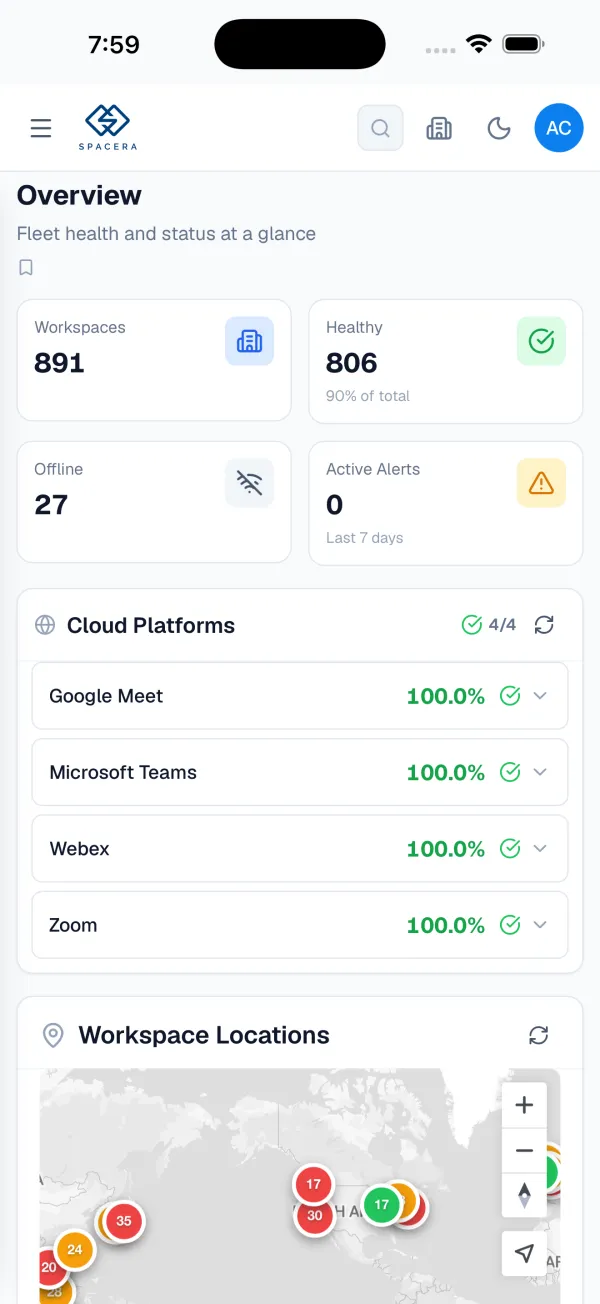
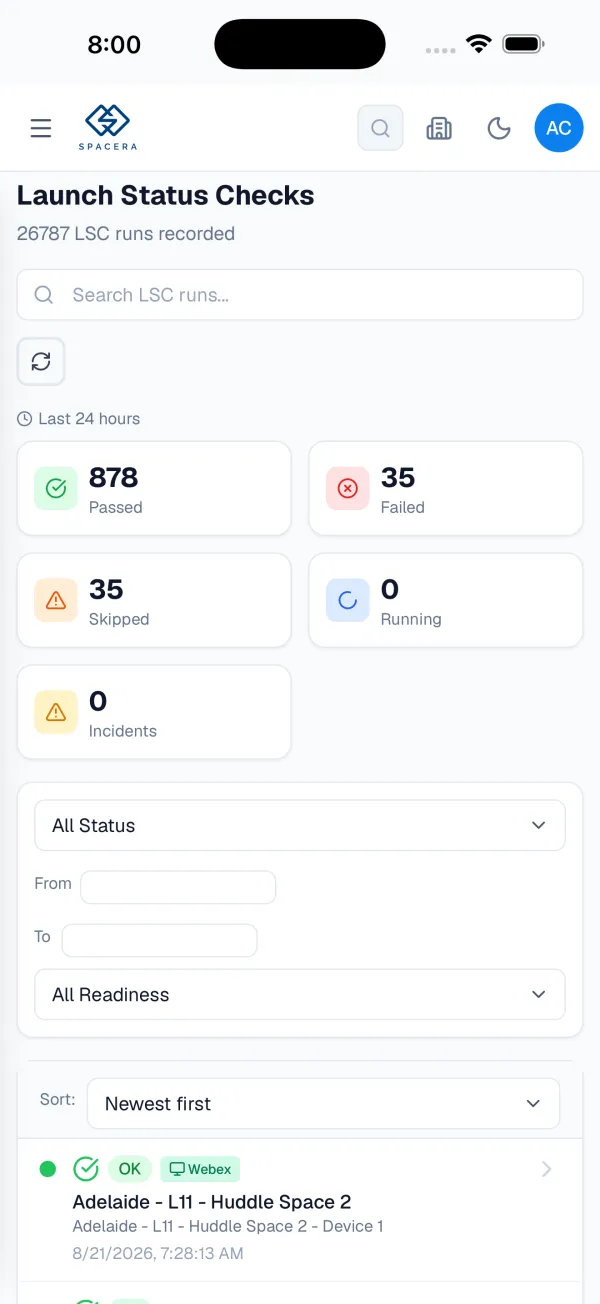
Room health, morning Launch Checks and live alerts on iPhone, iPad and Android. When a room needs you, the alert finds you wherever you are.
- Alerts on your phone that open the room they're about
- This morning's Launch Checks, room by room
- Every room and device, searchable wherever you are
- Sign in with your Apollo account, including Microsoft single sign-on


Field notes. What breaks in meeting rooms, and what it takes to stop it.
The Visibility Tax: Paying to See Your Rooms
The Visibility Tax is what legacy AV vendors charge, per room, per month, to tell you whether your own meeting rooms work. What it costs, and how it ends.
73% of Meeting Room Failures Are Preventable. Here's the Data.
Most meeting room failures aren't hardware failures. They're configuration drift, network blips, and credential expiry — all detectable hours before anyone walks into a broken room. We analyzed the data. Here's what we found.
The 'It's Not My Fault' Epidemic: Ending the Blame Game in Meeting Room Support
AV blames Network. Network blames Microsoft. Microsoft blames the user. The user blames IT. And somewhere in the middle of this four-way finger-pointing contest, your meetings stay broken. This is why it happens — and how it ends.